
Page Contents
Key Takeaways
- Choose treatments based on the room’s primary needs, such as privacy, glare reduction, darkness, or ease of cleaning.
- Window direction affects when sunlight enters and how intense it feels.
- Bedrooms, media rooms, kitchens, and offices usually benefit from different approaches.
- Cellular shades, blinds, solar shades, shutters, and drapery each offer distinct light-control and maintenance benefits.
- Accurate measuring and cordless operation can make a major difference in daily use.
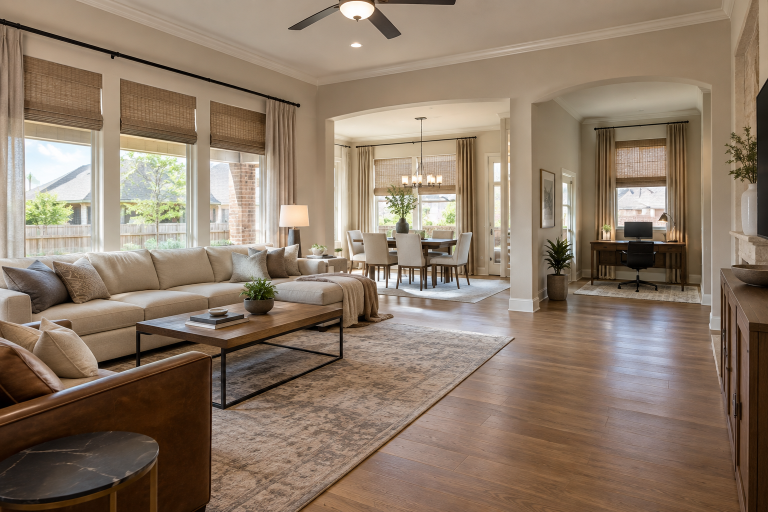
Choosing window treatments for a North Dallas home starts with how each room is used, not simply with color or trend. Whether you are handling glare in a sunny Plano living room, adding privacy near a busy street, or arranging window blinds repair in North Dallas, TX, the most useful solution is one that fits the window, the light, and your everyday routine.
North Dallas homeowners often need to balance bright Texas daylight with comfort indoors. A treatment that works beautifully in a north-facing dining room may not control late-afternoon glare in a west-facing office, so it helps to evaluate every window individually before making a whole-home decision.
Start With the Room’s Main Need
Before comparing fabrics or finishes, identify the problem the window treatment should solve. Ask whether the room becomes uncomfortably bright, whether television or computer screens catch glare, whether neighbors can see in after dark, or whether you need better sleep conditions. In North Dallas, TX, this assessment is especially important given the region’s bright Texas sunlight and the variety of neighborhoods from urban Plano to suburban communities.
Jot down a brief note for each window: when direct light arrives, whether the room needs a view, how much privacy is required, and whether children, pets, or furniture affect how the treatment operates. This quick review helps you avoid choosing a treatment that looks right but performs poorly. It can also show which existing blinds are worth keeping, since a search for window blind repair near me may turn up a simple fix for a cord, slat, or tilt mechanism that is cheaper than starting over.
Consider North Dallas Sun Exposure
In North Dallas, the direction a window faces changes the experience inside. East-facing windows typically bring stronger morning light. South-facing windows can receive long periods of daylight, while west-facing windows may create intense late-day glare and warmth. North-facing windows usually receive softer, more indirect light.
- East-facing windows: Adjustable blinds and light-filtering shades can soften early brightness while preserving daylight.
- South-facing windows: Solar shades, layered treatments, or adjustable shades can help manage long stretches of sunlight.
- West-facing windows: Room-darkening shades, solar fabrics, and lined drapery can be useful where afternoon glare is strongest.
- North-facing windows: Decorative drapery, light-filtering shades, or blinds may provide privacy without sacrificing the room’s softer light.
Check rooms at different times before deciding. Mature trees, roof overhangs, nearby homes, window size, and the type of glass can all change how much sun reaches a space.
Compare Common Window Treatment Options
Blinds
Slatted blinds provide adjustable control because the slats can be tilted to redirect light and limit direct views. Faux wood and aluminum options are often practical in spaces where easy wipe-down cleaning is important, such as kitchens and bathrooms.
Cellular Shades
Cellular shades use a honeycomb-shaped structure that creates air pockets near the glass. They can be a sensible option for bedrooms, offices, and other spaces where homeowners want a softer appearance along with added insulation at the window.
Roller and Solar Shades
Roller shades have a streamlined look, while solar shades are commonly selected to reduce glare and preserve some outward visibility. More open solar fabrics generally allow a clearer view outward but may offer less privacy, especially at night.
Drapery and Shutters
Drapery adds softness, texture, and color. Lined panels can provide stronger light control than unlined panels, and wider coverage beyond the frame can reduce side gaps. Shutters offer a more structured look with adjustable louvers, although window depth, trim, and clearance should be considered before installation.
Choose by Room
- Living rooms: Favor glare control while keeping the space welcoming. Layered shades and drapery can provide flexibility for entertaining and daytime viewing.
- Bedrooms: Prioritize nighttime privacy and consider room-darkening materials. Check the sides and bottom for light gaps if darkness is a concern.
- Home offices: Use solar shades or adjustable blinds to reduce screen glare while keeping daylight more even for calls and focused work.
- Kitchens and bathrooms: Select moisture-tolerant, easy-to-clean materials, and ensure the treatment does not interfere with handles, sinks, or ventilation.
- Media rooms: Use room-darkening shades or layered shades to limit glare and light leaks before movie nights or gaming sessions.
Balance Privacy and Daylight
Daytime privacy is different from nighttime privacy. A sheer or solar shade can make it harder to see inside during daylight, but indoor lighting after sunset can make the room more visible from outdoors. Test samples under both conditions when privacy is a priority.
Top-down, bottom-up shades can cover lower sightlines while allowing daylight through the upper window. Layering a light-filtering shade with drapery gives more control throughout the day. An outside mount may also cover more of the opening and help reduce side gaps.
Support Comfort and Energy Use
Window coverings can support comfort by managing sunlight before it fills a room. The Department of Energy notes that interior blinds or shades can reduce unwanted solar heat gain while helping homeowners use daylight effectively. In a North Dallas home, closing treatments before the strong afternoon sun reaches a west-facing room can be a practical daily habit.
Window treatments are not a repair for damaged glass, failed seals, or substantial drafts. If air leakage or window damage is the main concern, address the window itself along with any decorative or light-control improvements.
Plan for Safety and Operation
Homes with young children should give extra attention to operating systems. The Consumer Product Safety Commission recommends cordless window coverings or coverings with inaccessible cords where children are present. Keep cribs, beds, furniture, and toys away from accessible cords and secure continuous-loop cords correctly.
Motorized controls can also be useful for tall windows, wide openings, or hard-to-reach areas. Before choosing them, consider battery access, charging needs, preferred controls, and whether manual operation is important.
Measure Before Ordering
An inside mount fits within the window frame for a built-in appearance. An outside mount sits over the frame and may offer better coverage for privacy or light blocking. Measure width at the top, middle, and bottom, then measure height at the left, center, and right. Check handles, locks, trim, and nearby furniture before finalizing the plan.
Also read: Ranveer Singh Net Worth in Rupees: Bio, Wife, and Lifestyle
The best window treatments for a North Dallas, TX home are those that respond to how each room changes throughout the day. By considering sun direction, privacy, operation, maintenance, and room use together, homeowners across North Dallas can create spaces that are more comfortable, practical, and visually cohesive.


